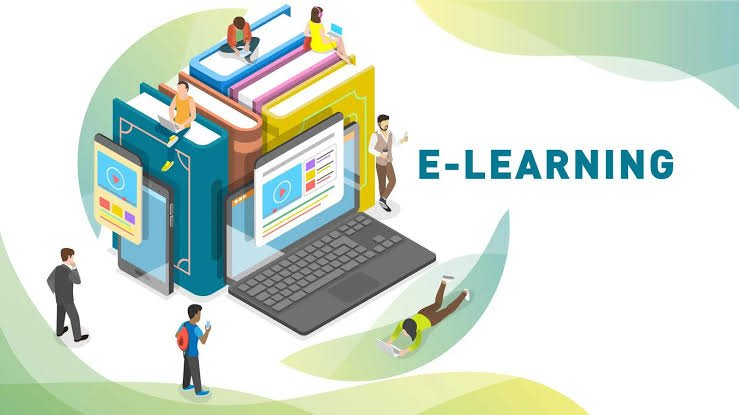
Unemployed South Africans looking for an opportunity to study through online learning can apply for E-Learning LMS Learnerships 2026.
The programme provides access to different learnership qualifications, including opportunities in business administration, information technology, end-user computing, management and entrepreneurship.
One of the biggest attractions of the programme is its use of e-learning, allowing learners to complete theoretical training through a Learning Management System (LMS).
Applications are completed online, making this an opportunity worth considering for unemployed South Africans looking for learnership programmes in 2026.
However, applicants should understand that registering and completing assessments does not automatically guarantee placement.
E-Learning LMS Learnerships 2026 Overview
Programme: E-Learning LMS Learnerships Country: South Africa Training Method: Online / E-Learning, depending on qualification Target Group: Primarily unemployed applicants for advertised unemployed programmes Application Method: Online Minimum Education: Depends on qualification; many advertised intakes require Matric Stipend: Depends on the funded programme and qualification Closing Date: No universal closing date published for all programmes Selection: Application and assessment process applies
What Is the E-Learning LMS Learnership?
LMS stands for Learning Management System.
A Learning Management System is an online platform used to deliver and manage training.
Instead of receiving all your learning material in a traditional classroom, learners can access training material electronically.
Depending on the programme, an LMS may be used for:
Learning material
Assessments
Assignments
Videos
Training activities
Communication
Progress tracking
This can make learning more accessible to candidates participating in programmes that support online training.
Is the E-Learning LMS Learnership a Single Qualification?
No.
This is an important point that applicants should understand.
“E-Learning LMS Learnership” is commonly used online to describe access to different learnership qualifications delivered through an online learning system.
It should not automatically be treated as the name of one qualification.
Different programmes may be available at different times.
Applicants should therefore check the actual qualification name and NQF level when applying.
E-Learning Learnership Fields
Programmes repeatedly advertised through the e-learning system have included fields such as:
Business Practice
New Venture Creation
New Venture Creation for SMMEs
End User Computing
Business Administration
Generic Management
Information Technology: Systems Support
Information Technology: Business Analysis
Automotive Sales and Support Services
The exact qualifications available can change.
A qualification appearing on a training provider’s programme list does not necessarily mean that a funded unemployed learner intake is currently available.
Always check the application system for current opportunities.
End User Computing Learnership
One of the popular options associated with e-learning programmes is End User Computing.
This type of programme can help learners develop practical computer skills.
Depending on the qualification, training can include areas such as:
Computer fundamentals
Microsoft Office
Word processing
Spreadsheets
Presentations
Email
Internet usage
Digital communication
Basic workplace computer skills
This can be useful for applicants interested in administrative and office-based careers.
Business Administration Learnership
Business Administration is another commonly advertised programme.
Learners can potentially develop skills relating to:
Office administration
Communication
Record keeping
Customer service
Business processes
Workplace organisation
Administrative support
These skills can be useful in many different industries.
IT Systems Support Learnership
Applicants interested in information technology may also find programmes relating to IT Systems Support.
Depending on the qualification, learners may develop knowledge relating to:
Computer hardware
Software
Technical support
Operating systems
Networks
Troubleshooting
User support
Always check the entry requirements because IT programmes can have different educational requirements from basic business learnerships.
IT Business Analysis
IT Business Analysis programmes are generally more specialised.
Business analysts help organisations understand business requirements and determine how processes and technology can be improved.
Applicants should check the NQF level and educational requirements before applying.
Do not assume that every IT-related qualification is entry-level.
Who Can Apply for E-Learning LMS Learnerships?
Requirements depend on the specific programme.
Many widely advertised unemployed learner intakes have required applicants to:
Be South African
Be currently unemployed
Have Grade 12/Matric
Be able to read and write in English
Be committed to completing the programme
Meet the requirements of the particular qualification
Some programmes may have additional requirements.
These can include:
Age restrictions
Location
Specific school subjects
Computer literacy
Previous qualifications
Disability status for designated programmes
Access to suitable technology
Ability to complete assessments
Always use the requirements shown for the programme you are actually applying for.
Can You Apply Without Matric?
This depends on the qualification.
Many advertisements for E-Learning LMS programmes specifically require Grade 12/Matric.
However, learnership qualifications can have different entry requirements.
Applicants without Matric should not automatically assume they are excluded from every skills-development programme.
Instead, look for qualifications whose entry requirements match your education.
Never claim to have Matric if you have not completed Grade 12.
Many of the E-Learning LMS learnership opportunities advertised in South Africa are specifically targeted at unemployed applicants.
When completing your application, provide your employment status accurately.
Do You Need Work Experience?
Many entry-level learnerships are designed to help applicants gain skills and workplace exposure.
Previous formal work experience may therefore not always be required.
However, individual programmes can have their own criteria.
Read the requirements before applying.
Is the E-Learning Learnership Completely Online?
Do not automatically assume that the entire learnership can be completed from home simply because it uses an LMS.
The theoretical component of certain programmes can be delivered online.
A formal learnership can also include practical or workplace requirements.
This means a programme could involve:
Online theoretical learning
Assessments
Assignments
Practical activities
Workplace exposure
Attendance requirements
The exact delivery model depends on the qualification and programme.
Applicants should confirm the attendance and workplace requirements before accepting a placement.
What Do You Need for Online Learning?
If your programme includes online training, it can be useful to have access to:
Smartphone, tablet or computer
Internet connection
Email address
Reliable cellphone number
Basic computer or smartphone skills
Suitable place to study
The training provider should tell successful learners what equipment or connectivity is required.
Do not purchase expensive equipment before you have been officially accepted unless the programme specifically requires it.
E-Learning LMS Learnership Stipend
Different stipend amounts have been published online for these programmes.
Recent 2026 advertisements have commonly advertised amounts around R6,000 per month, while older programme information has mentioned ranges between approximately R3,000 and R6,000, depending on the qualification and programme.
For this reason, applicants should not assume that R6,000 is guaranteed for every E-Learning LMS learnership.
The actual learner allowance can depend on:
Qualification
NQF level
Funding
Employer
Learner category
Programme
Applicable learner agreement
If you are selected, confirm the stipend amount in your official programme documentation before relying on it.
Documents to Prepare
Applicants should keep their documents ready before beginning an online application.
These may include:
South African ID
Updated CV
Matric certificate
Highest qualification
Academic record, where applicable
Proof of residence, where requested
Banking confirmation, if required after selection
SARS documentation, where required
Disability documentation, where applicable
The exact documents required can differ between programmes.
How to Apply for E-Learning LMS Learnerships 2026
Applications are completed online.
Step 1: Access the Official Application System
Use the official training provider’s application or learner-registration system.
Avoid submitting sensitive information through random links copied from social media.
Step 2: Register Your Profile
New applicants may first need to create an account.
Use an email address you regularly access.
Step 3: Verify Your Email
Some online application systems send an email asking you to verify your email address.
Check:
Inbox
Spam folder
Junk folder
Complete the verification when required.
Step 4: Complete Your Profile
Enter accurate information about your:
Personal details
Education
Employment status
Qualifications
Skills
Contact details
Do not provide false information.
Step 5: Select an Appropriate Programme
Where different qualifications are available, choose one that matches your education and career interests.
Do not select a higher-level programme simply because you think it pays a larger stipend.
Step 6: Complete the Required Assessments
Applicants may be required to complete online assessments.
These can test areas such as:
English
Mathematics or numerical ability
Computer literacy
General aptitude
Take assessments seriously.
Step 7: Submit Supporting Documents
Upload the documents requested by the application system.
Make sure they are:
Clear
Readable
Correct
Current where certification is required
Step 8: Submit Your Application
Check your information carefully before submitting.
Step 9: Monitor Your Email
Further communication may be sent electronically.
Regularly check your email and cellphone after applying.
E-Learning LMS Learnership 2026 Application Link
Applications are now handled through SpecCon Holdings’ Passport 2 Work platform powered by TAP.
Select Browse Jobs to see available learnerships and other opportunities.
Open a learnership for which you meet the requirements.
Complete the screening questions and submit your application.
SpecCon says new opportunities are added regularly, so applicants should continue checking the platform if their preferred learnership is not currently displayed.
Application Fee: Free
SpecCon specifically states that it does not charge applicants a fee to apply for a learnership.
Important Application Update
Older E-Learning LMS advertisements may direct applicants to the previous training.elearning.co.za application system.
Applicants should instead use the current SpecCon application process through Passport 2 Work/TAP, as SpecCon states that all learnership applications are now handled through this platform.
Online assessments can help determine whether an applicant meets the requirements for a particular programme.
Do not panic if you are asked to complete an assessment.
Prepare by practising:
Basic English
Reading comprehension
Mathematics literacy
Numerical reasoning
Computer literacy
Complete the assessment yourself.
Having someone else complete an assessment for you can create problems later if you are selected and cannot perform at the expected level.
Does Applying Guarantee Placement?
No.
Submitting an application or completing an assessment does not mean you have automatically received a learnership.
Selection can depend on:
Assessment results
Qualification requirements
Available funding
Employer requirements
Available positions
Location
Number of applicants
Programme-specific criteria
Continue applying for other opportunities while waiting.
Are E-Learning LMS Applications Always Open?
Online learner registration and application systems can remain accessible for extended periods.
However, this should not be confused with having an unlimited number of funded learnership positions available every day.
A particular qualification or funded intake can:
Open
Reach capacity
Close
Reopen later
Have different requirements
For this reason, applicants should register when the legitimate application system is accepting candidates and regularly check for suitable opportunities.
Benefits of an E-Learning Learnership
Depending on the programme, learners can potentially benefit from:
Accredited training
Digital skills
Workplace experience
Online learning
Recognised qualification
Learner allowance
Improved computer literacy
Business skills
IT skills
Improved employment prospects
However, no learnership can guarantee permanent employment after completion.
E-Learning Learnership Scam Warning
Because “online learnership” is a popular search term, scammers can use it to target unemployed people.
Be careful if someone:
Guarantees acceptance
Requests payment for placement
Asks for your bank PIN
Requests an OTP
Requests online banking passwords
Sends suspicious shortened links
Claims you won a learnership you never applied for
Demands money before releasing your stipend
Verify the organisation responsible for the programme before submitting personal information.
Frequently Asked Questions About E-Learning LMS Learnerships 2026
1. What is an E-Learning LMS Learnership?
It is a learnership programme where an online Learning Management System can be used to deliver and manage training.
Different qualifications can be offered through the system.
2. Are E-Learning Learnerships available in 2026?
Yes.
E-Learning LMS learnership opportunities continue to be advertised for unemployed South Africans in 2026.
Availability depends on the programme and funded intake.
3. How do I apply?
Applications are completed online through the relevant training provider’s application system.
Applicants may need to register, verify their email, complete their profile and complete assessments.
4. Do I need Matric?
Many advertised unemployed E-Learning LMS programmes require Grade 12/Matric.
Requirements can differ by qualification, so check the particular programme.
5. Can I apply without work experience?
Many learnerships are designed for applicants who need to gain practical experience.
Previous experience may not be required unless specified.
6. Must I be unemployed?
Many of the publicly advertised programmes target unemployed applicants.
Check the requirements of your particular intake.
7. Is the learnership completely online?
Not necessarily.
Some theoretical learning can be completed online, while practical or workplace components may still apply.
8. What is an LMS?
LMS stands for Learning Management System.
It is software used to provide, manage and track education or training online.
9. What courses are available?
Frequently advertised programme areas include:
Business Practice
New Venture Creation
End User Computing
Business Administration
Generic Management
IT Systems Support
IT Business Analysis
Automotive Sales and Support Services
Availability changes.
10. How much is the stipend?
Some 2026 advertisements state approximately R6,000 per month.
However, applicants should confirm the actual amount for their programme because stipend amounts can differ according to funding and qualification.
11. Do I need a computer?
Requirements depend on the programme.
Some online training can potentially be accessed through different devices, while certain programmes may require a computer.
Successful applicants should confirm technical requirements with the training provider.
12. Do I need internet access?
Online learning requires connectivity.
The programme provider should explain the connectivity requirements and whether any support is provided.
13. Will I have to complete an assessment?
Applicants may be required to complete online assessments before being considered for placement.
14. Does passing an assessment guarantee acceptance?
No.
Assessment performance can be one part of a larger selection process.
15. Will I get a job after completing the learnership?
Employment is not guaranteed.
The purpose of the programme is to provide qualifications, knowledge and practical skills that can improve your employment prospects.
16. Can I apply for more than one programme?
Follow the rules of the application system.
Choose programmes for which you genuinely meet the entry requirements.
17. Should I pay someone to apply?
Never pay an individual who promises guaranteed placement in exchange for money.
E-Learning LMS Learnership Interview Questions and Answers
Applicants who successfully pass initial screening may be interviewed.
These are practice questions only and are not confirmed questions from a particular training provider.
1. Tell us about yourself.
Example answer:
“My name is [Your Name]. I completed Matric in [year] and I am currently unemployed. I am looking for an opportunity to develop practical workplace and digital skills. I am willing to learn and committed to completing the programme.”
2. Why do you want to join this learnership?
Example answer:
“I want to gain a recognised qualification and practical experience. I am also interested in improving my digital skills and preparing myself for future employment.”
3. Are you comfortable studying online?
Example answer:
“Yes. I understand that online learning requires discipline and time management. I am prepared to follow the learning schedule, complete assignments and ask for assistance when I need it.”
4. How will you manage your time?
Example answer:
“I will create a schedule for my learning activities and make sure I complete important tasks before their deadlines. I will treat the learnership like a work commitment.”
5. What would you do if you experienced an internet problem?
Example answer:
“I would inform the appropriate facilitator if the problem affected my training and try to find an alternative connection where possible. I would also make sure I catch up on any work I missed.”
6. What are your computer skills?
Example answer:
“I can use basic computer applications, email and the internet. I am willing to learn more advanced skills during the programme.”
Change this answer according to your actual abilities.
7. Why should we select you?
Example answer:
“I am committed to learning and improving myself. If selected, I will take the training seriously, complete my assignments and participate fully in both the learning and practical components.”
8. What are your strengths?
Example answer:
“I am willing to learn, responsible and able to follow instructions. I also try to complete tasks on time.”
9. What would you do if you didn’t understand an online lesson?
Example answer:
“I would review the learning material again and use any additional resources provided. If I was still unsure, I would contact my facilitator for assistance rather than ignoring the problem.”
10. Where do you see yourself after the programme?
Example answer:
“I would like to have successfully completed the qualification, improved my digital and workplace skills and be in a stronger position to apply for employment.”
Tips Before Applying
Before submitting an E-Learning LMS application:
Update your CV.
Prepare your South African ID.
Prepare your Matric certificate.
Use an active email address.
Check your spam folder after registering.
Prepare for online assessments.
Practise basic English and mathematics.
Improve your computer literacy.
Read the qualification requirements.
Check whether practical attendance is required.
Confirm the stipend for your specific programme.
Never pay for guaranteed placement.
Continue applying for other legitimate opportunities.
Final Thoughts
E-Learning LMS Learnerships 2026 provide another route for unemployed South Africans to access skills-development opportunities using online learning technology.
Programmes commonly advertised through e-learning systems cover areas such as Business Administration, End User Computing, IT Systems Support, Business Analysis, Generic Management and New Venture Creation.
Applicants should remember that “E-Learning LMS” does not necessarily refer to one single qualification and that online registration does not guarantee a funded placement.
Check the qualification carefully, complete your application and assessments honestly, and confirm the stipend and delivery method if you are selected.
Most importantly, use legitimate application channels and continue applying for other opportunities while waiting for feedback.
Important: Fezile Nosenga is an independent career information website and is not a SETA, employer, training provider or recruitment agency. Programme availability, stipends and entry requirements can change. Applicants should verify the specific programme before submitting an application.